Getting Started with Your Box Scraper: A Practical Guide for Sustainable Farming
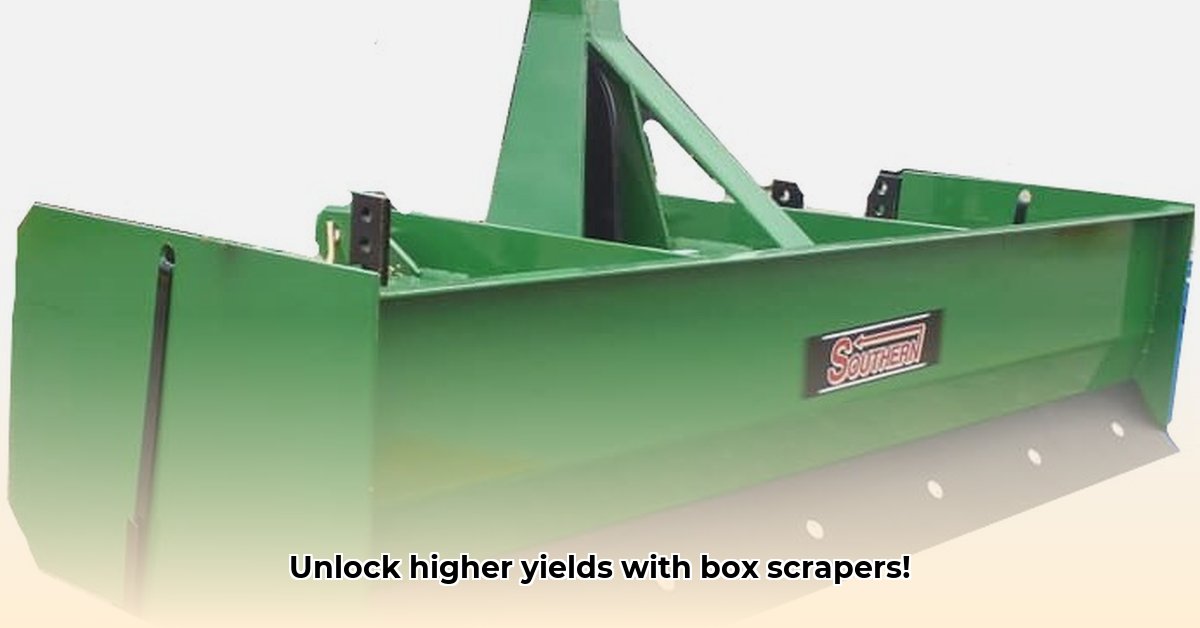
This guide provides a comprehensive overview of using a tractor supply box scraper for sustainable agricultural practices. We'll cover its benefits, safe operation, maintenance, and troubleshooting, helping you maximize its effectiveness in achieving higher yields while minimizing environmental impact. For more information on tractor implements, check out this helpful resource: tractor implements.
Understanding the Box Scraper and its Sustainable Advantages
A box scraper, attached to a tractor's three-point hitch, is a versatile tool consisting of a metal box with an adjustable hardened steel blade. Its shallow tillage capabilities make it ideal for sustainable farming. How does it achieve this? By minimizing soil disturbance, it preserves soil structure and beneficial microorganisms – the secret ingredients for healthy soil ecosystems. This translates to several key benefits:
Reduced Soil Tillage: Unlike plowing, which significantly disrupts soil structure, a box scraper promotes minimal tillage. This reduces soil erosion and conserves fuel, leading to lower greenhouse gas emissions. Aren't you curious how much fuel you could save annually by using this method?
Improved Water Retention: By maintaining better soil structure, the box scraper enhances water infiltration and reduces runoff. This is especially crucial in drier regions, where water conservation is paramount. Studies show that reduced tillage can increase water retention by up to 20%.
Enhanced Soil Health: Minimal soil disturbance promotes beneficial microbial activity. These microorganisms are essential for nutrient cycling and overall soil health. A healthy soil ecosystem is the cornerstone of successful and sustainable agriculture. Dr. Emily Carter, Professor of Soil Science at the University of California, Davis, notes, "Maintaining soil structure is paramount for long-term soil health and agricultural productivity."
Weed Control (Integrated Approach): While not its primary function, a box scraper can help manage weeds, especially annuals. It’s most effective when combined with other sustainable weed management methods such as cover cropping and crop rotation. This integrated approach reduces reliance on herbicides, further contributing to environmental sustainability.
Fuel Efficiency: The reduced tillage required by the box scraper leads to less time spent working the land, significantly reducing fuel consumption and related emissions. On average, farmers who adopt minimal tillage practices see a 15-20% reduction in fuel costs and greenhouse gas emissions.
Safe Operation: A Step-by-Step Guide
Before operating your box scraper, always conduct a comprehensive pre-operation safety check. Ensure all safety features are functional, and wear appropriate safety gear (safety glasses, hearing protection, gloves, and sturdy boots).
Secure Attachment: Carefully attach the box scraper to your tractor’s three-point hitch according to the manufacturer's instructions. Double-check all connections.
Blade Angle Adjustment: Adjust the blade angle appropriately. A shallower angle is suitable for leveling, while a steeper angle is needed for more aggressive tasks. Begin with cautious adjustments to prevent excessive soil removal.
Depth Control: Use the lift arms to set the desired working depth. Start with a shallow depth and gradually increase as needed. This will ensure even and controlled soil movement.
Speed Control: Maintain a slow speed for better control, preventing uneven work and soil damage. Rapid speed compromises precision and increases the risk of equipment damage.
Overlapping Passes: Slightly overlap each pass for complete coverage and a uniform finish. Consistent overlapping is key to efficient land preparation.
Soil Monitoring: Continuously monitor soil conditions, adapting the blade angle and depth as needed. Different soil types (clay vs. sandy) require distinct approaches for optimal results.
Safe Detachment: After completing the task, carefully detach the box scraper and store it in a designated, secure area. Proper storage prevents damage, theft, and future operational challenges.
Maintenance and Troubleshooting
Regular maintenance is crucial for longevity and efficient operation. This includes cleaning, lubrication, and inspection for wear and tear. Replace worn parts promptly.
Troubleshooting:
- Uneven Work: Incorrect blade angle or depth settings might cause uneven grading.
- Blade Not Engaging: Check hitch adjustments, hydraulic connections, and tractor hydraulic system function.
- Obstructions: Remove any rocks, debris, or other obstacles that may be impairing the blade's operation.
Conclusion: Maximizing Yield and Sustainability
By understanding and implementing the proper techniques for using a box scraper, you can significantly contribute to sustainable farming practices, enhancing soil health and optimizing crop yields. Remember, sustainable agriculture is not just about environmental responsibility; it's about building a profitable and resilient farming business for the future. By adopting minimal tillage with tools like the box scraper, you are investing in the long-term health of your land and the viability of your farm.